
Building more value from every tree
Study tours, government partnerships and industry collaborations are accelerating the exchange of ideas on fibre utilization, forest management and the bioeconomy.
Managing forests differently
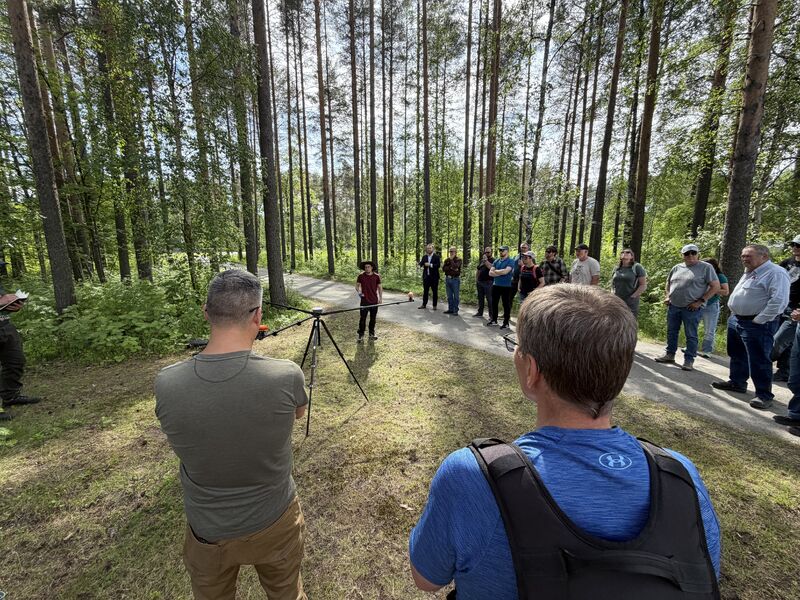
One lesson repeatedly highlighted by Canadian visitors is Finland’s approach to commercial thinning.
Unlike B.C., where thinning is relatively uncommon, Finland revisits forests several times during a rotation, removing selected trees to improve the health, quality and value of the remaining stand.
Forestry consultant Ken Day, who has travelled to Finland three times to study its forestry practices, believes this is one of Canada’s biggest opportunities.
The benefits extend beyond producing higher-quality sawlogs. Commercial thinning supplies fibre for pulp, engineered wood products and bioenergy while improving forest resilience and reducing competition among trees.
Following their study tour, members of the B.C. delegation concluded that Canada could benefit from managing forests for long-term stand value rather than simply maximizing harvest volume. In a report, they identified commercial thinning as an opportunity to improve fibre utilization while reducing wildfire risk and creating additional economic value from forests.
“We’re highly skilled at large-scale harvesting operations, but we need to learn how to make timber harvesting work efficiently in one-, two-, or three-hectare forest stands like they do in Finland. This is new to us”.
Making use of every fibre
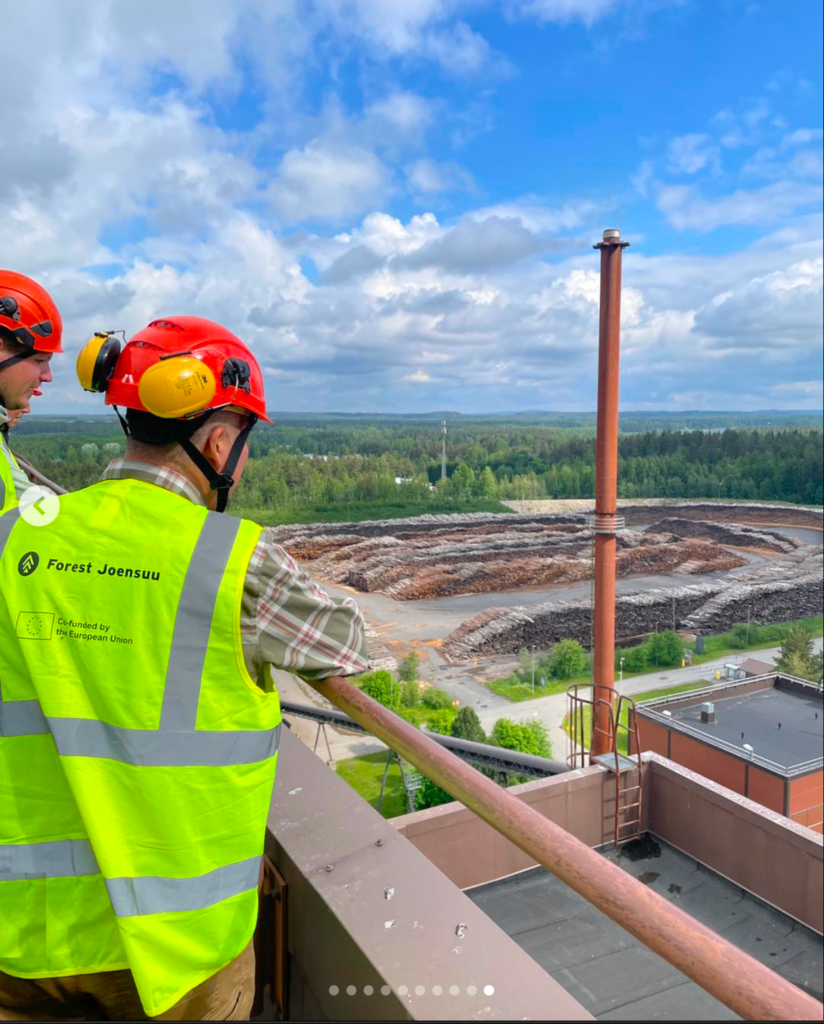
The B.C. delegation reported that perhaps Finland’s greatest strength lies in how thoroughly it utilizes wood.
Rather than leaving branches, tops and small-diameter trees in the forest, much of that material is converted into bioenergy or transformed into higher-value products.
Integrated industrial sites combine sawmills, pulp production, engineered wood manufacturing and bioenergy generation, extracting maximum value from each harvested tree.
Members of the delegation observed that Finland has developed an integrated circular bioeconomy in which companies continually invest in research, technology and improved fibre utilization throughout the value chain.
That approach aligns with Canada’s growing interest in expanding production of engineered wood products – including cross-laminated timber, veneer-based products and other advanced wood materials – instead of relying primarily on commodity lumber.
Technology drives decisions
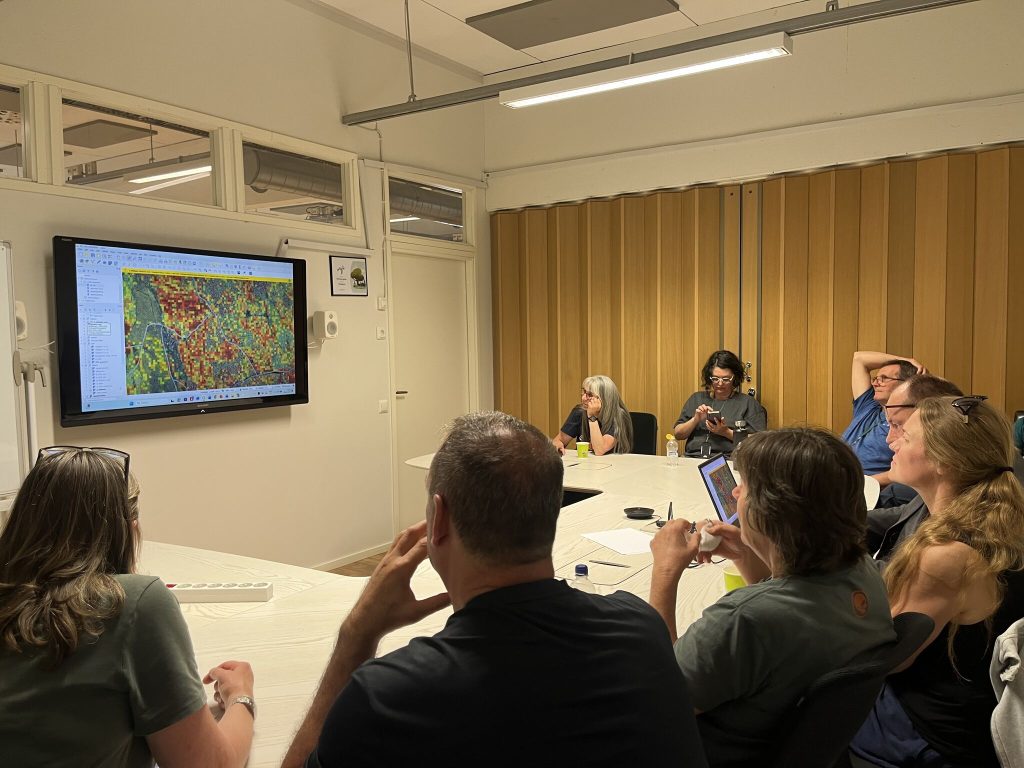
Technology has also become one of Finland’s competitive advantages.
According to Business Joensuu, international forestry delegations are especially interested in how Finland collects highly accurate forest resource data, uses it to support management decisions, deploys advanced harvesting equipment and integrates the entire forestry value chain.
Those investments in digital forestry, remote sensing and forest inventories support everything from harvest planning and fibre logistics to biodiversity management and wildfire preparedness.
The B.C. delegation similarly recommended expanding Canada’s use of detailed forest inventories, LiDAR mapping and publicly available forest data to improve planning and decision-making.
Investing in people
Canadian visitors have also been impressed by Finland’s investment in workforce development.
Specialized schools train forestry machine operators using advanced harvesters and simulators while teaching silviculture, planning and modern forest management practices.
The B.C. delegation recommended establishing similar specialized training programs in Canada to support increasingly advanced harvesting technologies and more intensive forest management.
Adapting, not adopting
Even Finland’s strongest advocates caution against viewing the country as a blueprint.
The two countries differ significantly in geography, ownership structures, forest ecosystems and governance. Finland’s forests are predominantly privately owned, while most Canadian forests are publicly owned under tenure systems. Finland has also faced biodiversity challenges associated with intensive forest management.
Those differences reinforce FPInnovations CEO Blouin’s view that Canada should adapt, not adopt, Finnish practices.
Still, the growing number of government agreements, research partnerships, industry collaborations and study tours suggests Canada sees considerable value in Finland’s experience.
The challenge is no longer whether Canada can learn from Finland.
It is how quickly the country can turn those lessons into practical solutions that improve fibre utilization, strengthen rural economies and create more value from every tree harvested.
Story by Jennifer Ellson
As part-time Managing Editor of Madison’s Lumber Reporter, Jennifer brings deep forest industry knowledge and editorial expertise.
Jennifer plays a key role in delivering the in-depth market insights Madison’s readers rely on.