
The province’s new timber allocation rules set to replace historic supply agreements with auction sales, raising concern across the forestry sector
The Government of Quebec’s proposed overhaul of its forestry regime, Bill 97, is now at the centre of one of the province’s most heated debates.
Since being tabled in April 2025, the legislation has drawn criticism from Indigenous governments, environmental organizations, labour unions, and industry stakeholders.
In recent weeks, tensions escalated to blockades and emergency meetings, prompting the government to promise amendments.
The bill, formally titled An Act mainly to modernize the forest regime, is the first major reform since the Sustainable Forest Development Act (A-18.1) came into force in 2013.
The government has framed Bill 97 as a necessary modernization to boost forest productivity, adapt to climate change, and provide more predictable access to timber. But opponents argue the reform risks undermining Indigenous rights, biodiversity protection, and the stability of the forestry sector.
What the current system looks like
Quebec’s forest management framework is currently guided by the Sustainable Forest Development Act (A-18.1), which rests on several principles:
- Ecosystem-based management, aimed at maintaining biodiversity and forest health;
- Integrated land use planning, involving public consultations and collaboration among stakeholders;
- Government-controlled harvest planning, with the Ministry of Natural Resources and Forests (MRNF) setting allowable cuts and allocations;
- Five-year supply guarantees, which provide mills with a specific annual volume of timber.
This system centralized decision-making in the MRNF, while balancing ecological goals and industrial needs.
What Bill 97 proposes
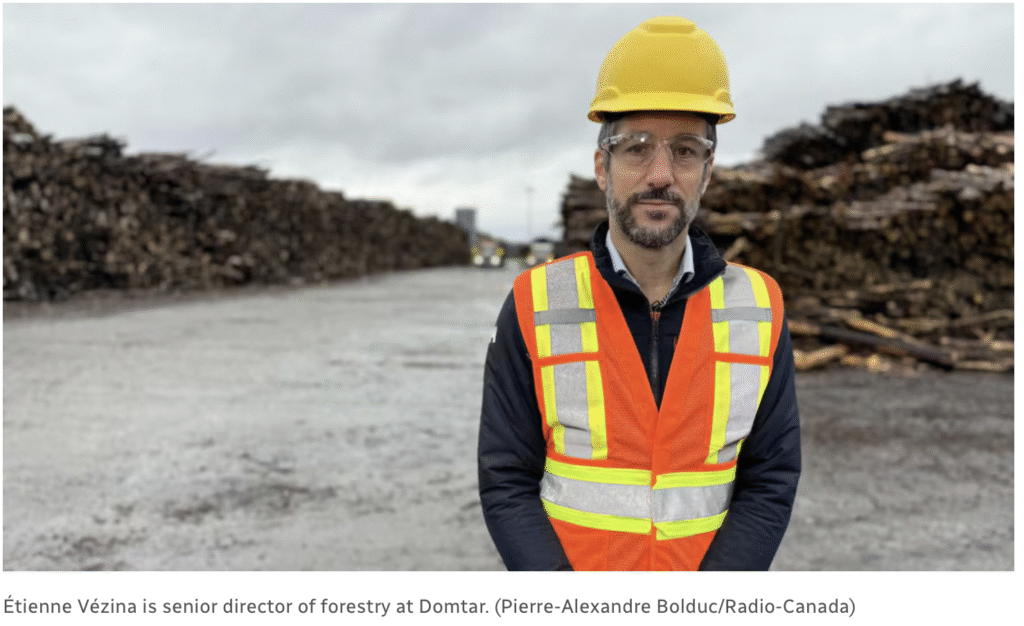
Bill 97 seeks to replace much of that structure. The main changes include:
- A triad zoning model. Public forests would be divided into three broad zones: conservation areas with strict limits on logging, multi-use areas permitting tourism and other activities alongside forestry, and priority forest development zones focused on intensive timber harvesting. Officials have suggested that as much as 30% of forests could fall into priority zones, though precise allocations remain undefined.
- New 10-year licenses. Five-year supply guarantees would be replaced by Sustainable Forest Development Licenses, valid for 10 years. The government argues this would encourage longer-term investment and silviculture.
- Regionalized management. While the MRNF would still issue licenses, Bill 97 would devolve more authority to regional forest managers, giving them flexibility to adapt plans to local realities.
The government says that for sawmills, the reform could provide more security and efficiency and that longer licenses would improve investment planning, and concentrated harvesting could reduce costs. But industry observers say uncertainty about zoning and fibre availability may delay decisions until regulations are clarified.
Read the full proposal here: https://cdn-contenu.quebec.ca/cdn-contenu/forets/documents/gestion/RA_TRAF_ang.pdf
response from québec forest industry group
The Conseil de l’industrie forestière du Québec (CIFQ) (Quebec Forest Industry Council) generally supports the bill, particularly the creation of priority development zones, as it provides the predictability needed for long-term investments in the forestry sector, according to CIFQ president Jean-François Samray.
However, some within the industry also feel the bill is overly prescriptive and could hinder their operations. The creation of ‘Priority Forest Development Zones’ is the bill’s main selling point for industry. The CIFQ has championed this as a way to provide the long-term predictability needed to justify major investments in sawmills, processing plants, and technology.
By creating zones where timber harvesting is the undisputed priority, the government aims to de-risk operations from land-use conflicts and legal challenges from other groups, ensuring a steady, reliable flow of wood fibre.
“The bill is a ‘good step forward’ and lays a foundation that de-centralizes forest management. But still, it remains too prescriptive.”
— CIFQ president Jean-François Samray.
The group welcomed Blanchette Vézina’s bill, saying it offers them more predictability and makes industry more competitive.
Rising opposition
From the beginning, Bill 97 drew pushback. The Assembly of First Nations of Quebec and Labrador (AFNQL) said the bill ignored recommendations made during consultations.
“The wording of the bill presented on April 23 is extremely surprising and disappointing, especially since we have been discussing this with the minister for over a year and have made clear recommendations that have not been considered.”
— AFNQL Chief Francis Verreault-Paul
Environmental groups, such as the Centre québécoise du droit de l’environnement (CQDE), also warned that the reform could weaken conservation.
“Several provisions of this bill are highly problematic, particularly those related to granting priority development zoning for forestry industries. In doing so, the government is compromising its ability to act in the public interest,” said CQDE executive director Geneviève Paul.
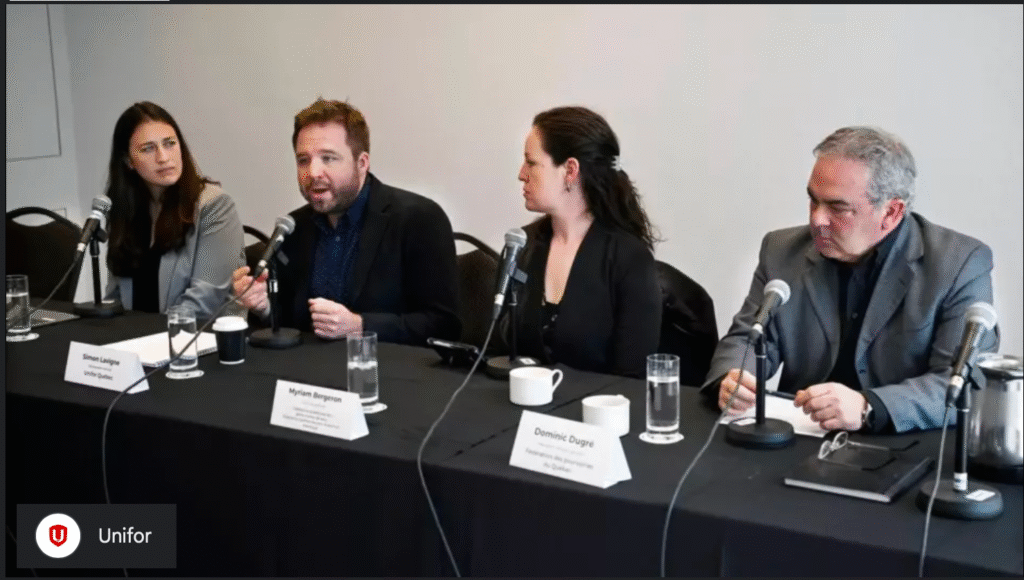
A labour group has voiced concerns as well. At an April press conference, Unifor Quebec director Daniel Cloutier said, “Despite the minister’s claims, this bill fails to protect jobs and will only add fuel to existing tensions with many partners in the forestry sector. The resulting conflicts will create even greater instability and a business climate that drives away the very investors we desperately need.”
Indigenous rights and treaty protections
Indigenous governments have stressed that Bill 97 cannot override existing agreements. In June, the Cree Nation Government issued a statement confirming that the Paix des Braves – a 2002 agreement between Quebec and the Cree Nation – prevails over Bill 97.
“The provisions of Chapter 3 of the Agreement Concerning a New Relationship between le Gouvernement du Québec and the Crees of Québec … prevail over the provisions of this Act,” the statement cited from section 8.2 of the bill.
The Cree emphasized that under their Adapted Forestry Regime, traplines remain the basis of planning, and rules concerning Sites of Special Interest and Areas of Wildlife Interest continue to apply. These provisions are constitutionally protected under the James Bay and Northern Québec Agreement.
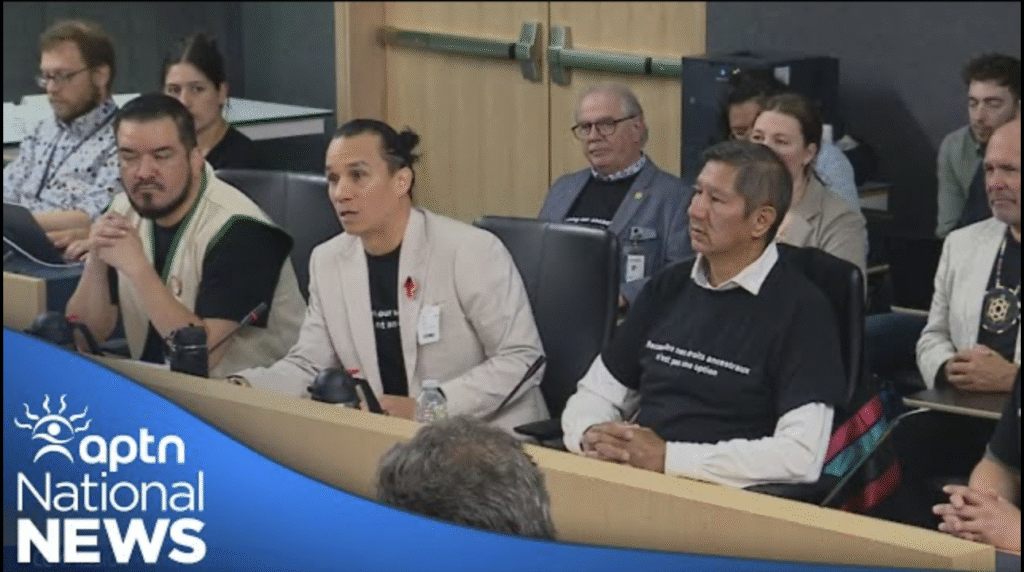
Other Indigenous leaders have voiced similar concerns. They argue Bill 97 infringes on their rights to land use, consultation, and stewardship.
Blockades and emergency meetings
By mid-2025, opposition had grown beyond formal statements. Blockades disrupted forestry operations in parts of Quebec, particularly in areas where Indigenous communities opposed the bill. On August 19, Indigenous Affairs Minister Ian Lafrenière met with First Nations leaders and forest industry representatives for six hours.
Following the meeting, he said the government would amend Bill 97 to reflect First Nations’ rights.
“One thing is clear: we all agree that it is more than essential to reform the forest regime, notably by making changes to take into account the rights of First Nations,” Lafrenière wrote on social media.
He added that the Atikamekw Nation and forestry industry representatives agreed to work on a pilot project for joint forest management. Natural Resources Minister Maïté Blanchette Vézina confirmed ongoing talks with the Assembly of First Nations Quebec–Labrador.
“We are committed to returning to the First Nations with a new creative approach to discuss the fundamental principles they hold dear,” she said. The ministers also reiterated Quebec’s goal to protect 30% of its territory.
“Currently, the forest industry harvests on 100% of the territory, and this is what we want to change by protecting one-third,” Lafrenière stated on X.
A complex balancing act
Bill 97 has exposed the competing pressures on Quebec’s forestry regime, said Louis Dupuis, economist, partner and consultant at S. Guy Gauthier Évaluateur, a firm specializing in the forest industry.
Dupuis, who represents AQEF, the association of Quebec independent logging entrepreneurs, said the bill still needs significant work to satisfy all stakeholders. So far, only the CIFQ, the province’s sawmill association, has expressed support.
“AQEF members were not even consulted,” telling Madison’s Lumber Reporter, “AQEF had no input on this proposal.”
— Louis Dupuis, economist, partner and consultant at S. Guy Gauthier Évaluateur
According to Dupuis, the government is trying to deliver greater predictability for industry, intensify harvesting in smaller areas, and bolster climate and conservation commitments.
But the backlash shows that any reform must also address treaty obligations, Indigenous governance, biodiversity protection, and labour stability.
In April, the CIFQ released a statement welcoming the introduction of Bill 97, highlighting the need for the changes to balance economic, social, and environmental priorities while supporting jobs and the broader contribution of the forestry sector to the province. The Cree Nation Government has asserted its legal precedence. The AFNQL continues to call for genuine recognition of rights and expertise.
Environmental organizations want stronger biodiversity commitments and public participation. Labour unions demand reforms that secure both jobs and ecosystems. In the meantime, sawmills and forest companies are waiting to see what changes will be made before committing to new investments. With ongoing negotiations, blockades, and promises of amendments, Bill 97’s path through Quebec’s National Assembly remains uncertain.
What comes next
The government has committed to continuing talks with the Assembly of First Nations Quebec–Labrador and to follow-up meetings with Indigenous communities.
Ministers Lafrenière and Blanchette Vézina said they would bring forward a “new creative approach” and clarified that treaty agreements such as the Paix des Braves remain intact.
For now, Bill 97 remains under review. But with constitutional obligations, Indigenous rights, and international biodiversity
commitments at stake, its final form may look very different from the legislation tabled in April.
What is clear is that Quebec’s forestry reform will not be decided in the legislature alone.
It will be shaped through negotiations, legal frameworks, and the ability of all parties – government, industry, Indigenous nations, workers, and environmental groups – to find common ground.
Story by Jennifer Ellson
As part-time Managing Editor of Madison’s Lumber Reporter, Jennifer brings deep forest industry knowledge and editorial expertise.
Jennifer plays a key role in delivering the in-depth market insights Madison’s readers rely on.