
The ample volumes of residual forest fibre energy available across North America is evidenced by the increasing number and ferocity of wildfires in the US and Canada
Recently Madison’s had the opportunity to visit a biomass fuel-to-electricity production facility through the University of British Columbia’s Faculty of Forestry & Environmental Stewardship’s Combined Heat and Power (CHP) Academy, based at the Alex Fraser Research Forest in central BC. Here is the second of three stories detailing those excellent projects:
Carbon Neutral Sustainable Energy Production
Biomass fuel consists of wood residue from sawmill operations and roadside logging debris, which is sourced under short-term supply agreements with various suppliers.
The wood is typically chipped to a uniform size to facilitate combustion and ensure efficient energy production.
When biomass woodchips are burned for energy, the carbon dioxide released into the atmosphere is roughly
equal to the amount absorbed during the tree growth, resulting in a closed carbon cycle.
This makes biomass woodchip a carbon-neutral fuel, with minimal net carbon emissions when compared to fossil fuels. It can be used as a direct fuel in biomass boilers and stoves for heating and electricity generation, providing a renewable alternative to fossil fuels. Additionally, woodchip can be converted into other forms of bioenergy such as wood pellets or biofuels.
Feedstock for Cellulosic Biomass Fuel Production
Cellulosic biomass is a key, cost-competitive, renewable energy source that powers industrial, residential, and electrical sectors through direct combustion and gasification. The feedstock generally consists of:
- Trees cut during a “thinning” operation when the stand is too densely planted
- Trees left after all other economic materials are removed during a timber harvest, such as twisted or diseased trees
- Cut residues left after a timber harvest, which can include small-diameter logs, branches and limbs, bark, needles, and stumps
- Logging residues can make up about 25-45 percent of the tree’s biomass when trees are harvested for sawtimber or pulpwood.
Williams Lake Waste-to-Energy Power Plant: Atlantic Power
The Atlantic Power Williams Lake Project is a 66 MW biomass-fired generating facility located in Williams Lake, in south-central British Columbia, Canada.
When the power plant began operations, the region saw an almost immediate improvement in particulate emissions estimated at approximately 90% reduction.
Atlantic Power receives a fixed price per megawatt-hour for energy produced. This price escalates annually with the British Columbia CPI. The Electricity Purchase Agreement does not provide for a capacity payment and the energy payment structure does not include a fuel cost passthrough.
The amount of power which can be produced by the plant is enough to provide the electricity needs of 52,000 homes in British Columbia.
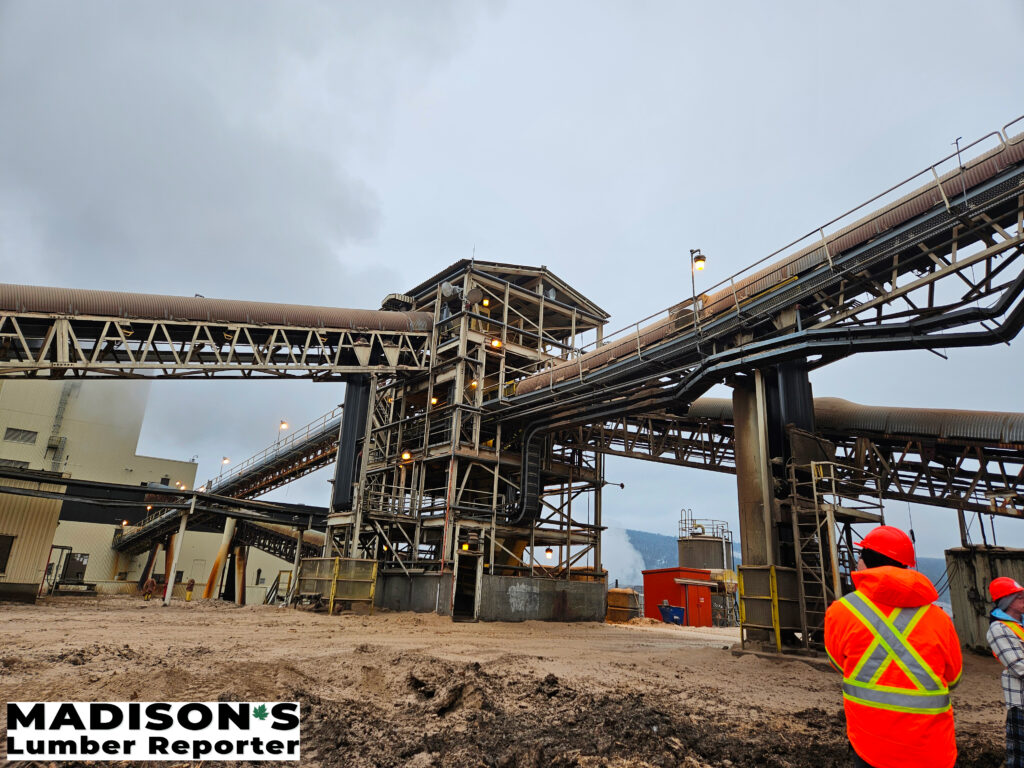
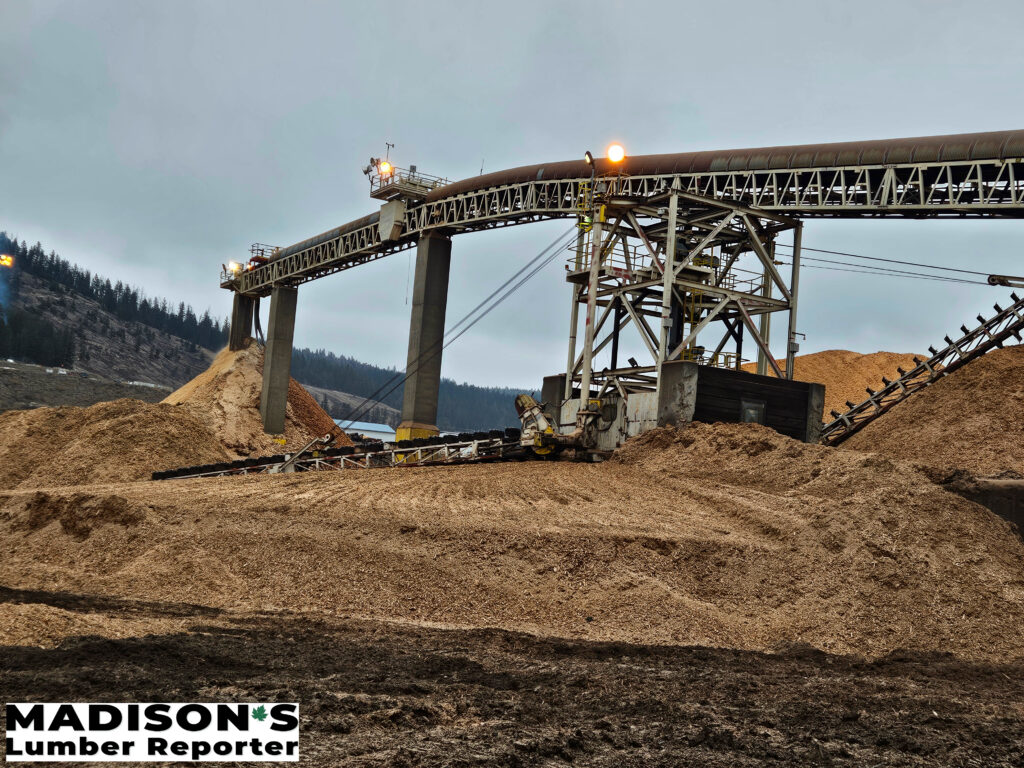
The plant runs efficiently, with a process starting from tractor-trailers that shuttle the chips and sawdust from local sawmills. The driver backs an eighteen-wheeler onto a magnetic-lift tipper. The entire truck, including the cab, is tipped up so the saw dust pours out the back and into a conveyor system.
From there, the wood-waste is transferred to external piles. Very large dozers push this feedstock onto belts that bring the wood into the plant, where grates are used to feed the boiler, similar to a coal plant.
This plant offers numerous benefits, serving as a crucial element in the BC Interior forestry industry and the Cariboo Region’s economic cluster.
By converting unmerchantable wood into carbon-neutral energy, the plant prevents the environmentally harmful practices of landfilling and open-air burning, reduces local forest fire risks, and mitigates greenhouse gas emissions.
As a renewable energy source, biomass supports forestry jobs, including logging, trucking, milling, and various local spin-off jobs.
The plant plays an essential role in the integrated supply chains of pulp and paper, lumber, and panel mills, contributing significantly to the local economy through property taxes, payroll, job creation, and annual donations: ATLANTIC POWER ANNUAL REPORT 2025
Wood chip Conveyor: Materials Handling
Atlantic Power Plant Emissions
Details of Environmental Emissions from January 1, 2025 to January 1, 2026: No rail ties or greater than 1% construction and demolition waste were used as feedstock during the reporting period.
A total of 277,058 wet tonnes of clean biomass was incinerated during 3,846 hours of normal operation. During this time two discrete monitoring sessions (one for Air Discharge from the Stack and one for Ash Analysis) were performed.
The test results were compared against the levels in Permit 8808 and the Hazardous Waste Regulation, and no
exceedances of any of the parameters in Schedules A and D of the Permit measured.
Continuous Emissions Monitoring System (CEMS) measurements were also taken as required by the Permit throughout this Period, with no exceedances recorded. The average steam flow for the Stack Particulate test on November 04, 2025 was 539 klb/hr (67.9 kg/s).
The average steam flow when the Ash Test sample was collected on December 04, 2025 was 541 klb/hr (68.2 kg/s).
These meet the Operating Conditions requirements stipulated in section 3.3 of the Permit.
Wood Chip Sorting at Biomass Power Plant
Every sawmill generates bark, sawdust, and offcuts. Those residues can fuel high efficiency boilers or be fed into biomass gasifiers to provide process heat and electricity.
STAY TUNED FOR PART III: The Economics of Small-Scale Forest Residue Biomass Energy Production